


DEPRAG Torque Friction Value Procedure: Reliable assembly of self-tapping and self-tapping screws.
Achieving a constant preload forceis the main objective of bolt assembly for two or more bolt parts. The usual tightening method “bolt assembly at predetermined torque” offers a solution when the components involved in the torque-controlled bolting procedure have a repeatable quality standard.
There are particular challenges in theassembly of self-tapping and self-cutting screws. Variations in part quality or alterations in the screw itself or hole geometry, part material structure, different surface properties of the screw thread or screw hole, as well as flexible elements and seating conditions, all result invarying torque values of the screw thread formation during the screw assembly process.
For bolt assemblies with predetermined final tightening values, different thread-forming torques create different preload forces and lead to
- Damage to the screw or part of the screw (breakage)
- Screw connection failure (loss of preload force)
- Screw head is not at the head
The DEPRAG friction torque value procedure provides the solution:
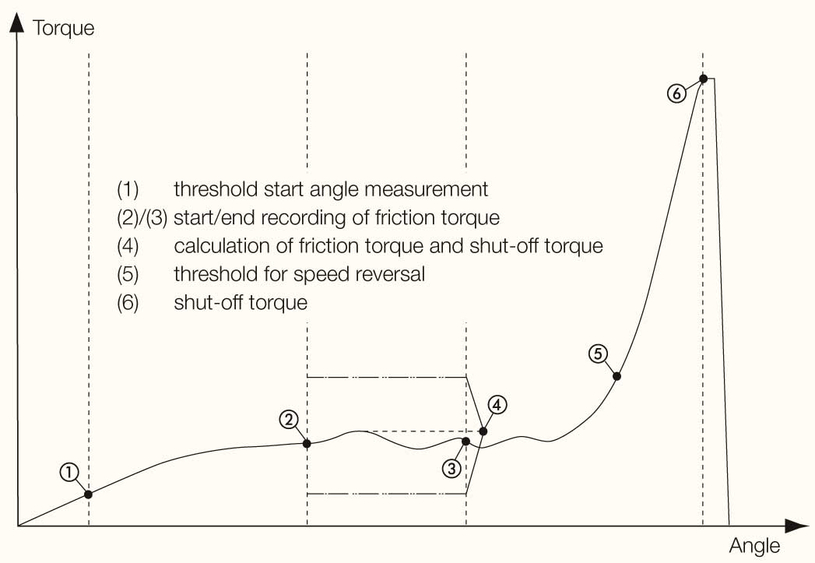
Within an adjustable angle range during the screw rolling process, the required upper and lower torque limits for the thread forming or thread cutting processes are recorded and an average value (= the friction torque value) is calculated. This friction torque value determines (via a threshold torque value) a required additional tightening factor or “difference torque”. The sum of the friction torque and the difference torque adds up to the optimum seating torque of the bolt.
Advantages:
Theoptimum preload force is applied to the bolt joint regardless of the torque variables that manifest themselves during the thread forming or thread cutting process.
Disadvantages:
The final tightening values are conditional due to the variable nature of the friction values. Therefore, an evaluation of the quality of individual bolt assemblies (e.g. via the Cmk index) is not possible.
The indicators available for quality assessment are the difference torque value or the measured angle value from the threshold torque to the achievement of the closing torque.