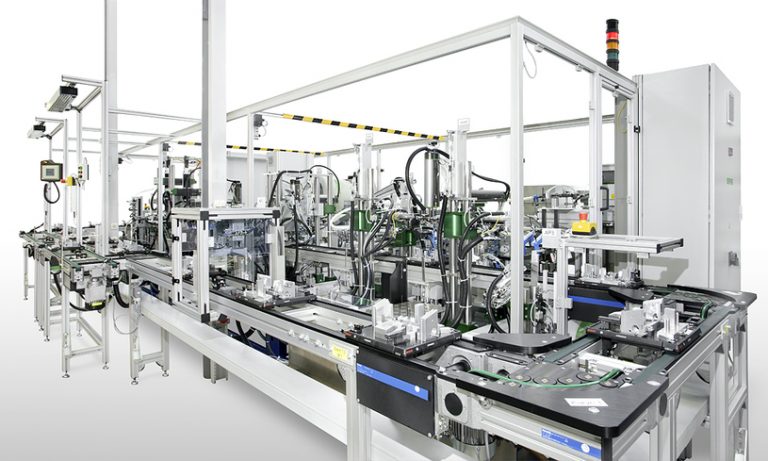



DEPRAG – For fully automated and efficient production
Mounting of active headrests
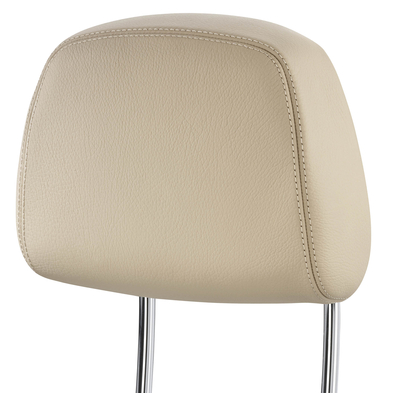
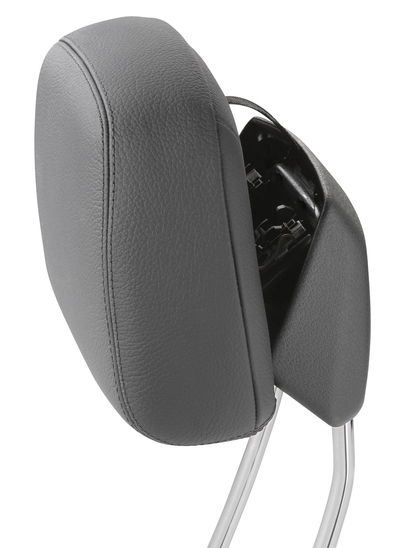
Process required:
The assembly cell for “intelligent” head restraints consists of 14 individual stations for maximum process reliability.
All assembly steps are electronically monitored and documented. Data is acquired by analysis and evaluated. Each assembled part is marked with a label showing the generated test values.
The machine’s cycle time is less than 10 seconds, which means that more than 260 headrests are produced per hour.
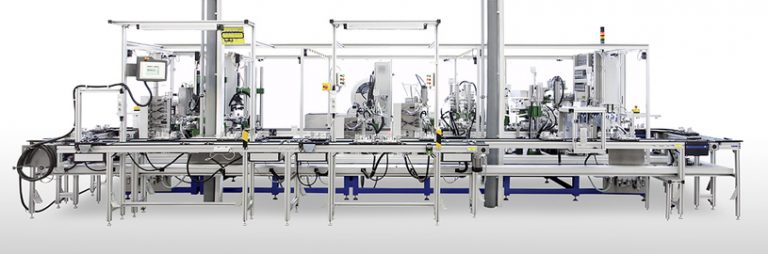
Individual workstations of the assembly system
Station 1:
This station is the starting point of the assembly line; it used two manual workstations to load the partial attachment with the “ZB release unit”, a “Carrier-CAK” and a “Slide”.
Station 2:
Automatic inspection cell to ensure that all necessary subcomponents are present and in the correct position on the pallet.
Station 3:
Inspection station for manual mounting centering devices. Is the label present?
Station 4:
A linear transport system separates two guide tubes per product, adjusts and positions them. Two slotted pins are “triggered” into place and automatically pressed into the Carrier-CAK securing the guide tubes.
Station 5:
A locking pin is separated and automatically inserted and secured in the “Slide” subassembly.
Station 6:
Two automatic grippers position the fed springs.
Station 7:
Confirms the position of the guide springs and also automatically feeds and separates two washers, which are placed with a vacuum gripper on the guide tubes.
Station 8:
Two coil springs are simultaneously sorted, controlled and set in place on guide tubes and washers using an automated double gripper.
Station 9-10:
Open positions: reserved for possible future expansion or additional processes.
Station 11:
The “slide” is automatically positioned and locked. The two pressure springs are positioned and tensioned and the guide tubes are positioned. The “slide” assembled by the station 1 operator is mounted on the “CAK carrier”. This “slide” unit causes the intelligent head restraint to move toward the driver’s head at lightning speed during an accident so that the driver is effectively protected.
Station 12:
A simulated emergency test is performed: The “Release Unit” is checked by releasing the previously fully assembled CAK module and to ensure that the function of the assembled headrest is fully tested. The test values, including date, time and operator identification number, are stored by data transfer to the attached computer. This data can be saved as an Excel spreadsheet for further processing and reading.
Station 13:
The completed CAK module receives a label with the test results generated at the previous test station.
Final station for the assembled headrest module:
Complete assemblies that have passed the functionality test are removed from the parts pallet and packaged by the operator. Defective assemblies (NOT OK) are sorted and a display panel indicates the specific assembly or test failure so that the assembly can be reworked. At the repair station, the operator repairs the unit as needed.